返回列表
🧠 阿头学 · 💬 讨论题

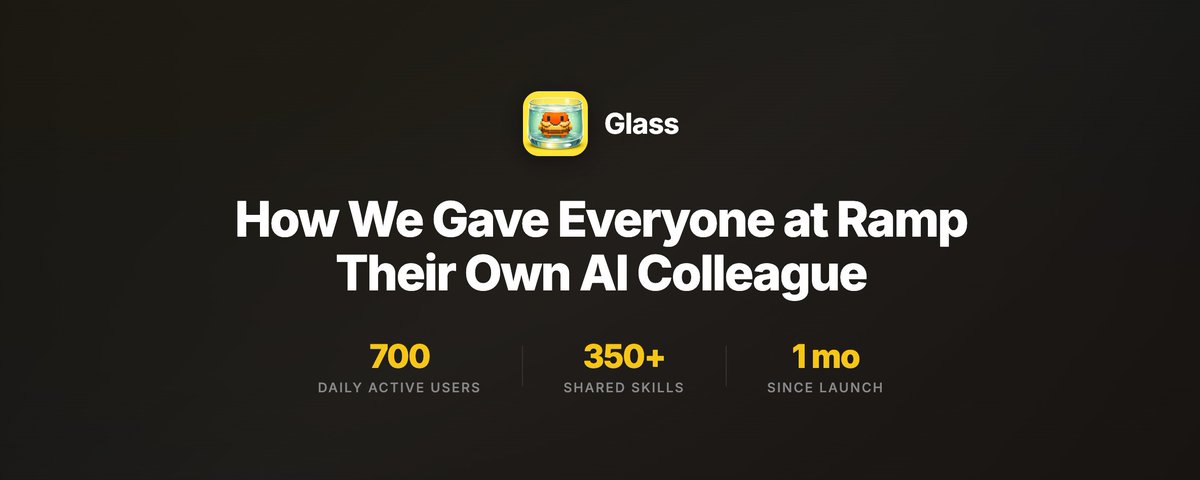
Ramp 用内部 AI 工作台把个人技巧变成组织能力

这篇文章最有价值的判断是:企业 AI 的真正瓶颈更像“组织级产品化与基础设施缺位”而不是单纯模型不够强,但 Ramp 明显在用成功叙事放大自研路线的普适性。
打开原文 ↗

2026-04-14 原文链接 ↗
阅读简报
双语对照
完整翻译
原文
讨论归档

核心观点

  • 瓶颈在框架,不只在模型 Ramp 认为模型已经够强,真正卡住员工的是配置、集成、权限和工作流承载层,这个判断在企业场景里大体站得住,但它故意弱化了幻觉、审计、稳定性和成本这些同样关键的问题。
  • 把个人突破沉淀成组织基线 Glass 最强的设计不是聊天,而是用 Dojo 把高手摸索出的流程封装成技能,再通过推荐系统扩散给全员;这比“人人自己学 prompt”更有效,也更接近真正的组织复利。
  • 抬高地板比培训更有效 文中最可信的部分是“产品即赋能”:默认连好工具、自动注入上下文、直接推荐可用技能,通常确实比培训课更能推动真实使用,因为员工不会先学会再用,只会先得到结果再愿意学。
  • 工作空间和自动化决定 AI 是否进入真实工作 多面板、文件内嵌、定时任务、Slack 助手、无头执行这些能力说明 Glass 不是单一聊天框,而是在试图成为内部工作的操作系统;这个方向是对的,因为真实工作本来就不是单线程对话。
  • 自研未必天然是护城河 Ramp 把“内部 AI 基建”上升为竞争优势,这有一定道理,但文章没有证明自研一定优于购买或混合方案;自研也可能带来维护负担、治理复杂度和人才依赖,PR 味道很重。

跟我们的关联

  • 对 ATou 意味着什么、下一步怎么用 这说明“AI 用得深”不是多开几个模型账号,而是把个人高频动作沉淀成可复用技能;下一步 ATou 应该先盘点自己最常重复的 5 个工作流,优先做成模板、检查清单或 agent skill,而不是继续打磨零散 prompt。
  • 对 Neta 意味着什么、下一步怎么用 这篇文章提示 Neta 更该关注“组织能力如何复利”而不是单点聪明;下一步可以建立一个轻量技能库,把有效提示词、分析框架、研究 SOP 版本化,并指定推荐机制,而不是靠口口相传。
  • 对 Uota 意味着什么、下一步怎么用 Uota 如果关心产品与社区扩散,这里最重要的启发是“产品机制胜过培训宣导”;下一步应把新用户 onboarding、功能推荐、最佳实践示例做成使用时触发,而不是再堆文档和说明会。
  • 对三者共同意味着什么、下一步怎么用 文章实际上给出了一套企业 AI 落地框架:接入层、上下文层、技能层、执行层;下一步可以拿这四层去审视自己手上的 AI 项目,凡是只停在聊天层的,基本都没有形成生产力闭环。

讨论引子

1. 企业 AI 的首要瓶颈到底是“模型不够可靠”,还是“组织没有把能力产品化”? 2. 共享技能库会成为组织复利飞轮,还是很快沦为没人维护的提示词垃圾场? 3. 对大多数公司而言,自研内部 AI 工作台真是护城河,还是昂贵且容易过时的工程执念?

模型已经足够好,欠缺的是承载它的框架

在 Ramp,AI 工具在公司内部的采用率达到了 99%。随后,我们注意到一件令人担忧的事,大多数人都卡住了。

问题并不在于模型不够强,也不是大家没有进取心,而是他们根本不知道该怎么把自己的配置做得更好。终端窗口、npm 安装和 MCP 配置,对大多数人来说都太难理解了。少数硬着头皮折腾过去的人,配置方案又各不相同,彼此之间也没有办法共享经验。我们制造出了紧迫感,却没有提供足够的基础设施,结果 AI 的真正上限,只向那些本来就懂得如何配置环境的人开放。

所以,我们决定自己做一套 AI 生产力工具,让每位员工都能成为 AI 高手,同时不必承受配置环境的痛苦。我们把它叫作 Glass。

每个人都能成为 AI 高手

模型本身已经非常出色了,但大多数人使用它们的方式,就像拉着手刹开法拉利。不是因为他们不聪明,也不是因为他们缺少野心,而是因为他们从没见过一个真正配置完善的环境是什么样,也不知道它能做到什么。

为了解决这个问题,我们围绕 Glass 确立了三条核心原则。

1. 不要限制任何人的上限。 对非技术用户来说,默认做法通常是简化,把产品变成轨道式体验,减少选项,让它蠢瓜也能用。我们完全不认同。在 Ramp,高阶用户依赖多窗口工作流、深度集成、定时自动化、持久记忆和可复用技能。目标不是消除复杂性,而是让复杂性隐身,同时保留完整能力。

2. 一个人的突破,应该成为所有人的基线。 最大的失败模式不是大家搞不明白,而是每个人都只能独自摸索。一个人发现的工作流,对其他人毫无帮助。Glass 必须能把局部胜利累积成组织能力,共享技能、传播最佳实践,并让每一次新发现都抬高全员的下限。

3. 产品本身就是赋能。 成为高效的 AI 用户,本身就是一种技能。人会通过反复练习和实验不断进步,但产品可以通过在恰当的时刻推荐恰当的技能,并现场展示什么叫做好,来加速这条成长曲线。再多培训,也比不上你正在做事时收到的一次精准提示。

第一天起,一切就已连接

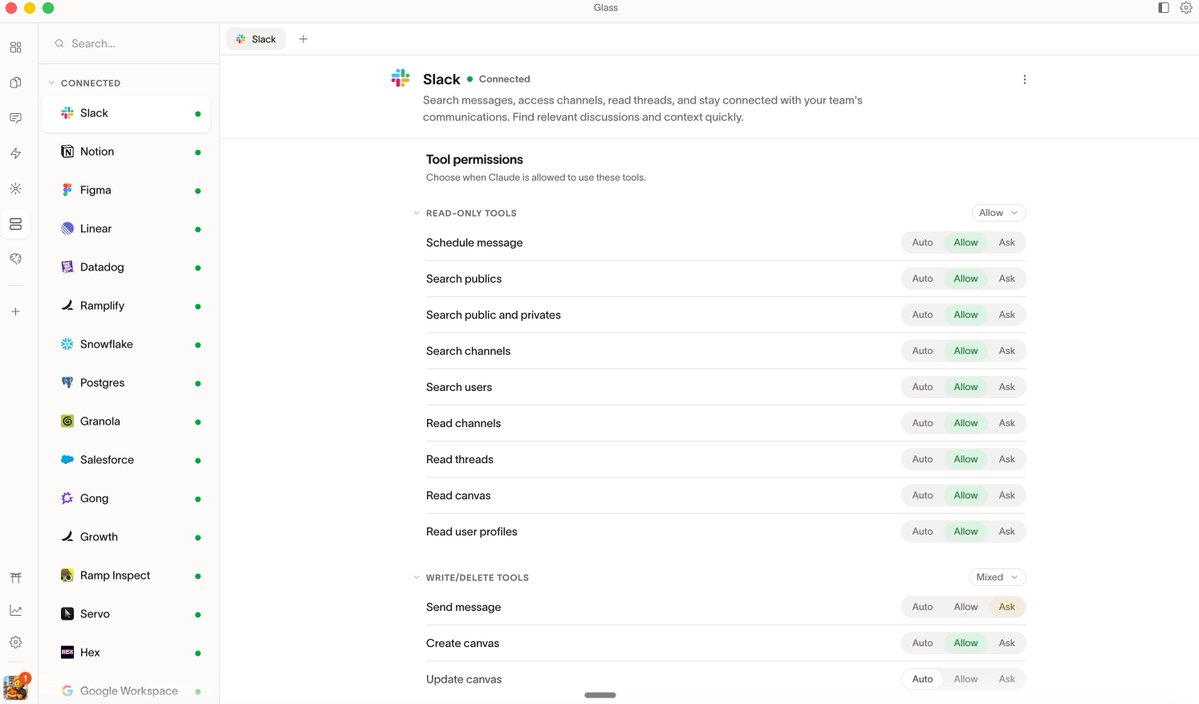
Glass 在安装时就会自动完成配置。用户通过 Okta SSO 登录一次,Ramp 的所有工具就都会以一键方式向他们开放。这也包括我们自研的产品,比如 Ramp Research、Ramp Inspect,以及我们新发布的 Ramp CLI。

这是那种不性感但决定一切能否成立的底层基础。当销售让 Glass 调取 Gong 通话中的上下文,再结合 Salesforce 数据补充信息,最后起草一封跟进邮件时,它就是能直接跑通,因为所有东西都已经连好了。

我们通过 Dojo 分发可复用技能

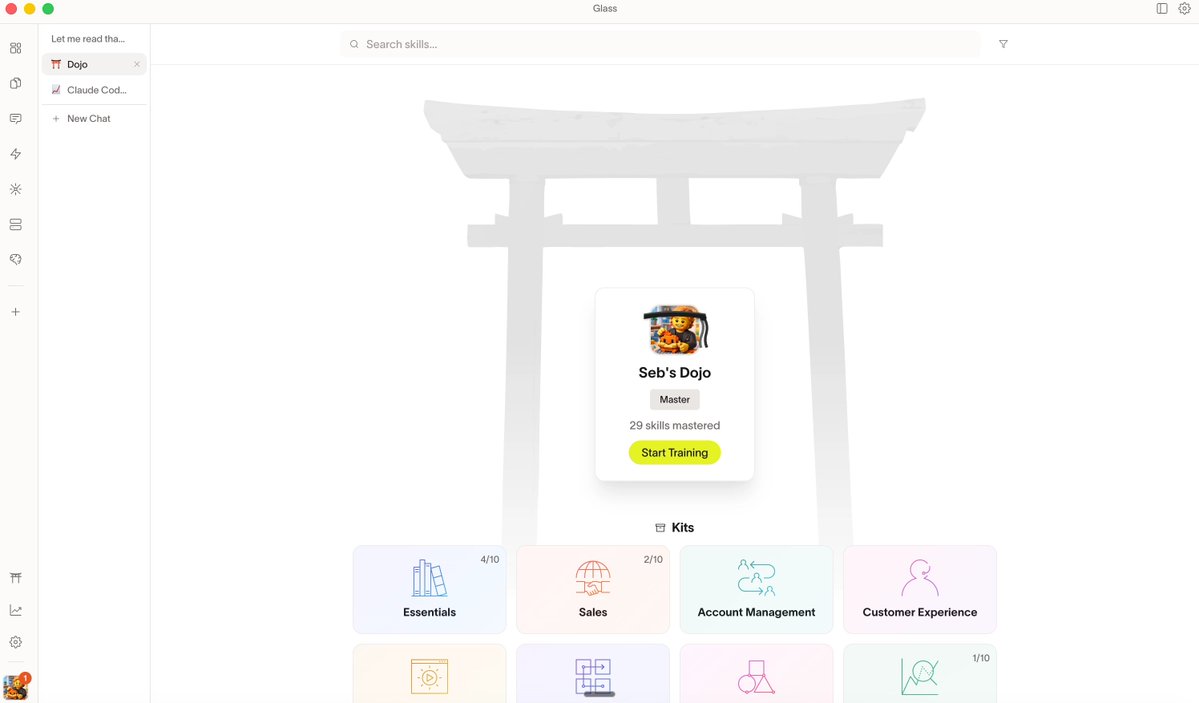
在组织内部共享经验,最简单的方式就是技能。技能是一些 markdown 文件,它会精确告诉代理如何完成某一项具体任务。我们还围绕它做了一个技能市场,叫 Dojo。

现在,当销售团队里有人摸索出分析 Gong 通话、拆解竞品提及、起草 battlecard 的最佳方式时,他们就可以把它打包成一个技能,把这种超能力交给团队里的每一位销售。某位 CX 工程师做出了一套 Zendesk 调查工作流,能够拉取工单历史、检查账户健康度、并给出解决路径建议,那么通过 Dojo,整个支持团队一夜之间都能升级。

目前,全公司范围内已经共享了 350 多个技能。它们由 Git 做版本管理,像代码一样被评审。这个市场本身就是飞轮。每共享一个技能,所有人的基线都会再抬高一点。

为了帮助大家找到合适的技能,Dojo 里还内置了一个 AI 向导,我们叫它 Sensei。它会查看你连接了哪些工具、你的岗位角色是什么、最近在做什么,然后推荐最可能对你有用的技能。一个新入职的客户经理,不需要从 350 个技能里自己翻目录。Sensei 会在第一天就把最重要的五个技能推到他面前。这也是产品承担赋能工作的另一个例子。Glass 不要求人先知道有什么可用,它会主动在用户当前所处的位置上接住他们。

https://ramp.com/careers

它记得你是谁,也记得你在做什么

用户第一次打开 Glass 时,我们会根据他们已经认证过的连接,建立一整套记忆系统。这样一来,每个聊天会话都能知道他们在和谁协作、当前有哪些项目在推进,还能关联相关的 Slack 频道、Notion 文档、Linear 工单等等。结果就是,代理花在搜索上的时间更少了,每一次对话一开始就带着用户期待中的上下文。

在底层,我们还会每 24 小时运行一次综合整理和清理流程,从用户过去的会话,以及 Slack、Notion、Calendar 这类已连接工具中提取更新。这意味着 Glass 能随着他们的工作世界一起变化,而不需要他们每次新开会话都重新解释一遍。

你不工作的时候,它也在工作

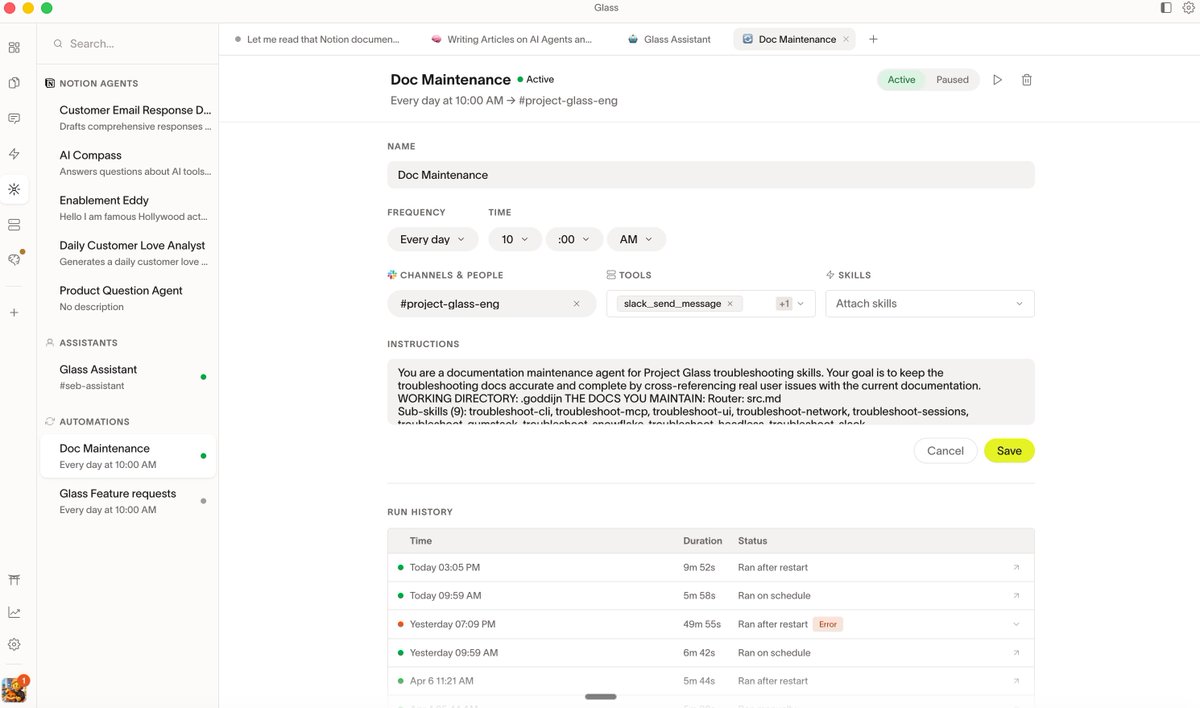
Glass 会把你的笔记本电脑变成一台服务器。你可以安排每天、每周或按自定义 cron 运行的自动化任务,并把结果直接发到 Slack。比如财务团队负责人每天早上 8 点拉取前一天的支出异常,再把摘要发到团队频道,这只需要一个几分钟就能设好的简单提示词。

你还可以创建原生运行在 Slack 里的助手,让它们在频道中监听并回复,同时调用你完整的 Glass 配置,包括你的集成、记忆和技能。某个运营团队就在一个下午里做出了这样一个助手,它可以通过 Notion 文档和 Snowflake 数据回答供应商政策相关的问题。

对于长时间运行的任务,Glass 还提供无头模式。任务发起后,你可以直接离开,需要权限审批时在手机上处理即可。等你回来,结果已经在那里等着了。

这是一套工作空间,不只是聊天窗口

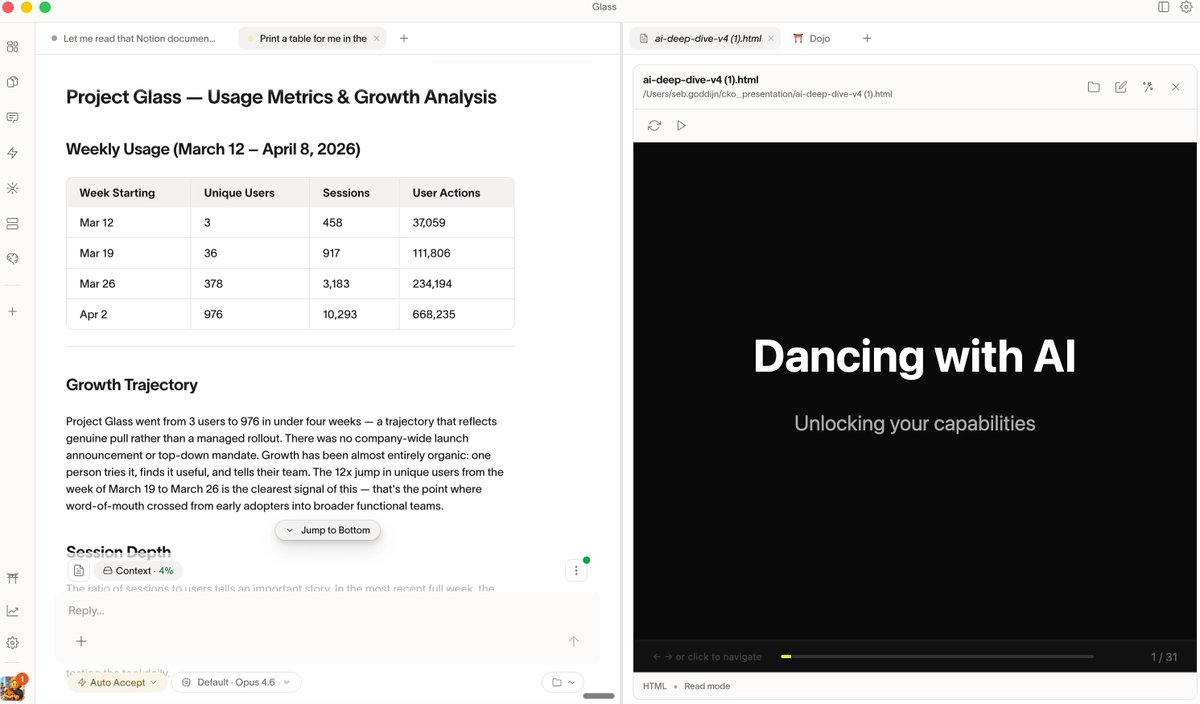
大多数 AI 产品只给你一条对话线程。Glass 给你的是完整的工作空间。界面围绕分栏面板构建,你可以把多个聊天会话并排铺开,也可以在对话旁边打开文档、数据文件和代码。它的工作方式像一个代码编辑器。标签页可以拖动重排,也可以横向或纵向拆分,工作时上下文始终保持可见。

这件事之所以重要,是因为真实工作本来就不是线性的。你可能在一个面板里起草 Slack 消息,在另一个面板里审查 Snowflake 查询结果,在第三个面板里阅读 PDF。Glass 会把 markdown、HTML、CSV、图片和代码直接以内嵌标签页的方式渲染出来,代码还带语法高亮。每当 Claude 创建或编辑一个文件,它都会自动打开,这样你不必切换窗口就能看到结果。

这种布局还会跨会话保留。明天你再回来时,工作空间会和你离开时一模一样,面板、标签,一个都不少。

拥有这套基础设施,本身就是竞争优势

最自然的问题是,为什么不直接买现成的。我们选择自研有三个原因。

  1. 内部生产力本身就是护城河。 如今,善用 AI 已经是核心业务能力。能让每位员工都高效使用 AI 的公司,会行动更快、服务客户更好,并持续累积竞争对手难以追上的优势。这意味着内部 AI 基础设施就是护城河的一部分,而护城河不该交给供应商。

  2. 速度。 当工具掌握在自己手里时,你能精确看到人卡在哪里。有人报问题的当天就能发修复。我们有一个 Slack 频道专门收集用户反馈,团队会自动把问题分流成工单,大多数都会在几小时内解决。等着供应商排路线图时,这种速度根本做不到。

  3. 它会直接反哺我们的外部产品。 Ramp 是一家 AI 优先的公司,我们为财务团队构建产品,而我们为内部用户解决的很多问题,也会直接映射到客户身上。怎样建立真正有帮助的记忆系统。怎样让人们构建、分发并维护有效技能。怎样通过使用行为来暴露功能。这些问题,先在内部解决,让我们在真正对外发布前就知道什么有效。Glass 让我们在最难的 AI 产品问题上积累了大量实战经验,而且这些试错不是拿客户来交学费。

简而言之,掌握整套技术栈能让我们学得更快,做出更好的 AI 原生产品,也为客户交付更好的结果。

我们学到了什么

在构建 Glass 的过程中,我们学到的最重要一件事是,真正获得最大价值的人,并不是那些参加了培训的人,而是那些第一天就装上一个技能并立刻得到结果的人。产品教会他们的速度,比我们亲自教要快得多。

这个发现重塑了我们对整个项目的看法。Glass 里的每个功能,其实都在暗中完成一次教学。技能会在你还不知道怎么提问之前,就先让你看到优秀的 AI 输出长什么样。记忆系统会让你明白,上下文就是泛泛回答和有用回答之间的区别。自愈式集成会让你知道,出错不一定是你的问题,系统会帮你兜住。这里面没有一项是按教育产品来设计的。但事实证明,当你把一个真正好用的工具交到人手里时,人会在做事的过程中学会。而且学得很快。

这也是我们现在最兴奋的地方。不是产品本身,而是当整个组织的下限同时被抬高时,会发生什么。一个 CX 团队负责人分享出一个技能,六十名销售一夜之间全部升级。一个新员工第一次打开 Glass,系统就已经知道他的团队、项目和工具。一个从没打开过终端的人,也能跑起定时自动化,而这在六个月前还得找工程师才能做。这样的复利是真实存在的,而我们才刚刚开始。

我们不相信降低天花板。

我们相信抬高地板。

如果你想一起把这件事做出来,或者你想在这样的一家公司工作,我们正在招聘

由 Ramp 的 Seb Goddijn、Shane Buchan、Cameron Leavenworth、Calvin Kipperman、Jay Sobel 和 Caroline Horn 共同打造。

The Models are Good Enough, The Harness Isn’t

At Ramp, we hit 99% adoption of AI tools across the company. And then we noticed something concerning: most people were stuck.

It wasn't that the models weren't good enough or that people lacked ambition, they just had no idea how to improve their set up. Terminal windows, npm installs, and MCP configurations were too much for most people to grok, and the few who pushed through had wildly different setups, with no way to share what they'd learned. We'd created urgency without providing enough infrastructure, and it limited the true upside of AI to people who already knew how to configure it.

So we decided to build our own AI productivity suite to make every employee an AI power-user without the pain of having to configure their environment. We’ve called it Glass.

模型已经足够好,欠缺的是承载它的框架

在 Ramp,AI 工具在公司内部的采用率达到了 99%。随后,我们注意到一件令人担忧的事,大多数人都卡住了。

问题并不在于模型不够强,也不是大家没有进取心,而是他们根本不知道该怎么把自己的配置做得更好。终端窗口、npm 安装和 MCP 配置,对大多数人来说都太难理解了。少数硬着头皮折腾过去的人,配置方案又各不相同,彼此之间也没有办法共享经验。我们制造出了紧迫感,却没有提供足够的基础设施,结果 AI 的真正上限,只向那些本来就懂得如何配置环境的人开放。

所以,我们决定自己做一套 AI 生产力工具,让每位员工都能成为 AI 高手,同时不必承受配置环境的痛苦。我们把它叫作 Glass。

Everyone Can Be An AI Power User

The models are already exceptional, but most people use them like driving a Ferrari with the handbrake on. Not because they aren’t smart, or lack ambition, they’ve just never seen what a well-configured environment looks like or what it can do.

To solve this problem we aligned around three core principles for Glass:

1. Don't limit anyone's upside. The default approach for non-technical users is to simplify: put the product on rails, offer fewer options, and make it dummy-proof. We couldn’t disagree more. At Ramp, power users thrive on multi-window workflows, deep integrations, scheduled automations, persistent memory, and reusable skills. The goal isn’t to remove complexity, but to make it invisible while preserving full capability.

2. One person's breakthrough should become everyone's baseline. The biggest failure mode wasn’t that people couldn’t figure things out. It was that everyone had to figure things out alone. A workflow discovered by one person didn’t help anyone else. Glass needed to compound wins into organizational capability: shared skills, propagated best practices, and a floor that rises with every discovery.

3. The product is the enablement. Becoming an effective AI user is a skill. People improve through repetition and experimentation, but the product can accelerate that curve by suggesting the right skill at the right time, and showing what “good” looks like in the moment. No amount of workshops can match a targeted nudge while you’re already doing the work.

每个人都能成为 AI 高手

模型本身已经非常出色了,但大多数人使用它们的方式,就像拉着手刹开法拉利。不是因为他们不聪明,也不是因为他们缺少野心,而是因为他们从没见过一个真正配置完善的环境是什么样,也不知道它能做到什么。

为了解决这个问题,我们围绕 Glass 确立了三条核心原则。

1. 不要限制任何人的上限。 对非技术用户来说,默认做法通常是简化,把产品变成轨道式体验,减少选项,让它蠢瓜也能用。我们完全不认同。在 Ramp,高阶用户依赖多窗口工作流、深度集成、定时自动化、持久记忆和可复用技能。目标不是消除复杂性,而是让复杂性隐身,同时保留完整能力。

2. 一个人的突破,应该成为所有人的基线。 最大的失败模式不是大家搞不明白,而是每个人都只能独自摸索。一个人发现的工作流,对其他人毫无帮助。Glass 必须能把局部胜利累积成组织能力,共享技能、传播最佳实践,并让每一次新发现都抬高全员的下限。

3. 产品本身就是赋能。 成为高效的 AI 用户,本身就是一种技能。人会通过反复练习和实验不断进步,但产品可以通过在恰当的时刻推荐恰当的技能,并现场展示什么叫做好,来加速这条成长曲线。再多培训,也比不上你正在做事时收到的一次精准提示。

Everything connects on day one

Glass comes auto-configured on install. People sign in once via their Okta SSO, and all Ramp’s tools become available to them with a one-click setup. This also includes home-grown products like Ramp Research, Ramp Inspect, and our newly released Ramp CLI.

This is the unsexy foundation that makes everything else possible. When a sales rep asks Glass to pull context from a Gong call, enrich it with Salesforce data, and draft a follow-up — it just works, because everything is already connected.
第一天起,一切就已连接

Glass 在安装时就会自动完成配置。用户通过 Okta SSO 登录一次,Ramp 的所有工具就都会以一键方式向他们开放。这也包括我们自研的产品,比如 Ramp Research、Ramp Inspect,以及我们新发布的 Ramp CLI。

这是那种不性感但决定一切能否成立的底层基础。当销售让 Glass 调取 Gong 通话中的上下文,再结合 Salesforce 数据补充信息,最后起草一封跟进邮件时,它就是能直接跑通,因为所有东西都已经连好了。

We Distribute Reusable Skills Through Our Dojo

The easiest way to share learnings across the organization is through skills. These are markdown files that teaches your agent exactly how to perform a specific task, and we’ve built out a marketplace for them called Dojo.

Now, when someone on the sales team figures out the best way to analyze Gong calls, break down competitive mentions, and draft battlecards, they can package it as a skill, and give that superpower to every rep on the team. A CX engineer builds a Zendesk investigation workflow that pulls ticket history, checks account health, and suggests resolution paths, and through Dojo the entire support team levels up overnight.

Over 350 skills have been shared company-wide. They're Git-backed, versioned, and reviewed like code. The marketplace is the flywheel: every skill shared raises the floor for everyone.

To help people find the right skills, Dojo includes a built-in AI guide we call the Sensei. It looks at which tools you've connected, what role you're in, and what you've been working on, and recommends the skills most likely to be useful to you. A new account manager doesn't need to browse a catalog of 350 skills — the Sensei surfaces the five that matter most on day one. It's another example of the product doing the enablement work: rather than expecting people to know what's available, Glass meets them where they are.

https://ramp.com/careers

我们通过 Dojo 分发可复用技能

在组织内部共享经验,最简单的方式就是技能。技能是一些 markdown 文件,它会精确告诉代理如何完成某一项具体任务。我们还围绕它做了一个技能市场,叫 Dojo。

现在,当销售团队里有人摸索出分析 Gong 通话、拆解竞品提及、起草 battlecard 的最佳方式时,他们就可以把它打包成一个技能,把这种超能力交给团队里的每一位销售。某位 CX 工程师做出了一套 Zendesk 调查工作流,能够拉取工单历史、检查账户健康度、并给出解决路径建议,那么通过 Dojo,整个支持团队一夜之间都能升级。

目前,全公司范围内已经共享了 350 多个技能。它们由 Git 做版本管理,像代码一样被评审。这个市场本身就是飞轮。每共享一个技能,所有人的基线都会再抬高一点。

为了帮助大家找到合适的技能,Dojo 里还内置了一个 AI 向导,我们叫它 Sensei。它会查看你连接了哪些工具、你的岗位角色是什么、最近在做什么,然后推荐最可能对你有用的技能。一个新入职的客户经理,不需要从 350 个技能里自己翻目录。Sensei 会在第一天就把最重要的五个技能推到他面前。这也是产品承担赋能工作的另一个例子。Glass 不要求人先知道有什么可用,它会主动在用户当前所处的位置上接住他们。

https://ramp.com/careers

It Remembers Who You Are, And What You’re Working On

When users first open Glass, we build a full memory system based on the connections they’ve authenticated. This gives every chat session context on the people they work with and their active projects, along with references to relevant Slack channels, Notion documents, Linear tickets, and more. As a result, the agent spends less time searching, entering each conversation with the context the user expects.

Under the hood, we also run a synthesis and cleanup pipeline every 24 hours, mining users’ previous sessions and connected tools like Slack, Notion, and Calendar for updates. This means Glass can adapt to their world without them having to re-explain things every session.
它记得你是谁,也记得你在做什么

用户第一次打开 Glass 时,我们会根据他们已经认证过的连接,建立一整套记忆系统。这样一来,每个聊天会话都能知道他们在和谁协作、当前有哪些项目在推进,还能关联相关的 Slack 频道、Notion 文档、Linear 工单等等。结果就是,代理花在搜索上的时间更少了,每一次对话一开始就带着用户期待中的上下文。

在底层,我们还会每 24 小时运行一次综合整理和清理流程,从用户过去的会话,以及 Slack、Notion、Calendar 这类已连接工具中提取更新。这意味着 Glass 能随着他们的工作世界一起变化,而不需要他们每次新开会话都重新解释一遍。

It Works While You Don’t

Glass turns your laptop into a server. You can schedule automations that run daily, weekly, or on custom cron, and post results directly to Slack. A finance team lead pulls yesterday's spend anomalies every morning at 8am and posts a summary to the team channel with a simple prompt that takes a few minutes to set up.

You can also create Slack-native assistants that listen and respond in channels using your full Glass setup, including your integrations, memory, and skills. An ops team built one that answers vendor policy questions by pulling from Notion docs and Snowflake data in an afternoon.

For long-running tasks, Glass has a headless mode: kick off a task, walk away, and approve permission requests from your phone. The results are waiting when you get back.
你不工作的时候,它也在工作

Glass 会把你的笔记本电脑变成一台服务器。你可以安排每天、每周或按自定义 cron 运行的自动化任务,并把结果直接发到 Slack。比如财务团队负责人每天早上 8 点拉取前一天的支出异常,再把摘要发到团队频道,这只需要一个几分钟就能设好的简单提示词。

你还可以创建原生运行在 Slack 里的助手,让它们在频道中监听并回复,同时调用你完整的 Glass 配置,包括你的集成、记忆和技能。某个运营团队就在一个下午里做出了这样一个助手,它可以通过 Notion 文档和 Snowflake 数据回答供应商政策相关的问题。

对于长时间运行的任务,Glass 还提供无头模式。任务发起后,你可以直接离开,需要权限审批时在手机上处理即可。等你回来,结果已经在那里等着了。

It's a Workspace, Not a Chat Window

Most AI products give you a single conversation thread. Glass gives you a full workspace. The interface is built around split panes, allowing you to tile multiple chat sessions side by side, or open documents, data files, and code alongside your conversations. It works like a code editor: drag tabs to rearrange, split horizontally or vertically, and keep context visible while you work.

This matters because real work isn't linear. You might be drafting a Slack message in one pane, reviewing a Snowflake query result in another, and reading a PDF in a third. Glass renders markdown, HTML, CSVs, images, and code with syntax highlighting inline as tabs. When Claude creates or edits a file, it opens automatically so you can see the result without switching windows.

The layout persists across sessions. When you come back tomorrow, your workspace is exactly how you left it - panes, tabs, and all.
这是一套工作空间,不只是聊天窗口

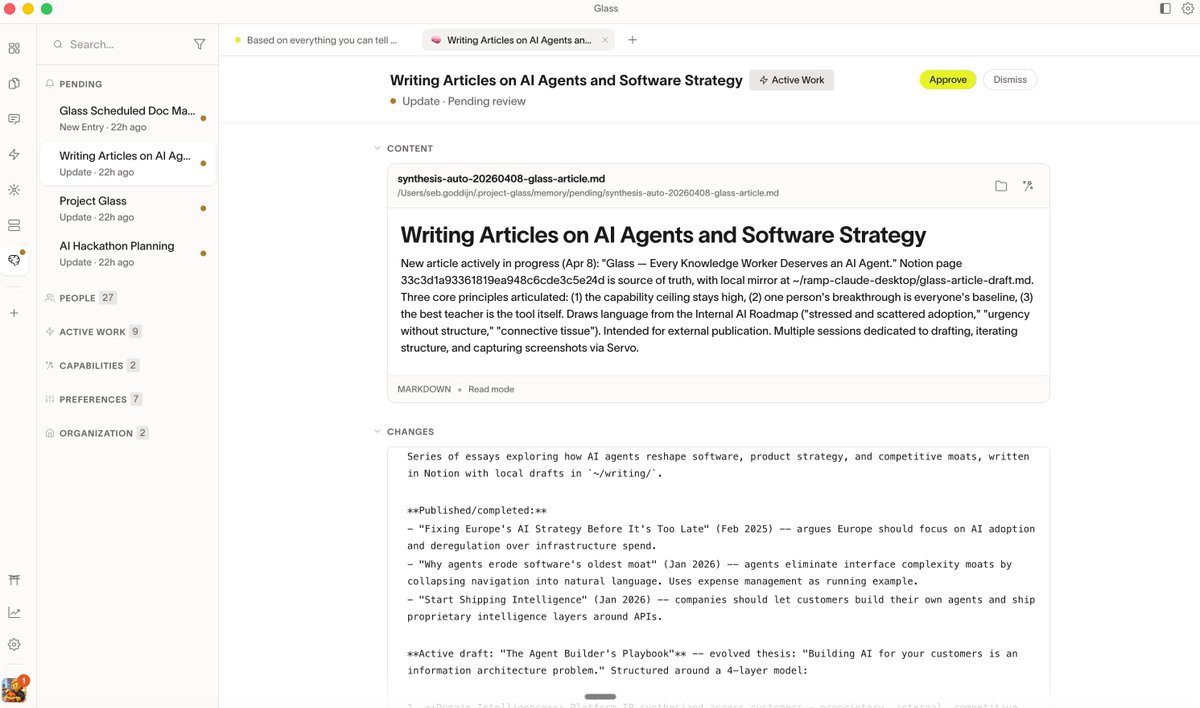
大多数 AI 产品只给你一条对话线程。Glass 给你的是完整的工作空间。界面围绕分栏面板构建,你可以把多个聊天会话并排铺开,也可以在对话旁边打开文档、数据文件和代码。它的工作方式像一个代码编辑器。标签页可以拖动重排,也可以横向或纵向拆分,工作时上下文始终保持可见。

这件事之所以重要,是因为真实工作本来就不是线性的。你可能在一个面板里起草 Slack 消息,在另一个面板里审查 Snowflake 查询结果,在第三个面板里阅读 PDF。Glass 会把 markdown、HTML、CSV、图片和代码直接以内嵌标签页的方式渲染出来,代码还带语法高亮。每当 Claude 创建或编辑一个文件,它都会自动打开,这样你不必切换窗口就能看到结果。

这种布局还会跨会话保留。明天你再回来时,工作空间会和你离开时一模一样,面板、标签,一个都不少。

Owning This Infrastructure Is A Competitive Advantage

The obvious question is why not just buy this. There are three reasons we built it in house.

  1. Internal productivity is a moat. Using AI well is now a core business need. The companies that make every employee effective with AI will move faster, serve customers better, and compound advantages their competitors cannot match. That makes internal AI infrastructure part of your moat, and you do not hand your moat to a vendor.

  2. Speed. When you own the tool, you see exactly where people get stuck. You can ship fixes the same day someone reports a problem. We have a Slack channel where users report issues, and our team triages them into tickets automatically, with most resolved in hours. You cannot do that while waiting on a vendor’s roadmap.

  3. It directly informs our external product. Ramp is an AI-first company building products for finance teams, and many of the problems we solve for internal users translate directly to customers. How do you build memory that actually helps? How do you enable people to build, distribute, and maintain effective skills? How do you surface functionality through usage? Solving these problems internally gives us conviction about what works before we ship it. Glass gives us reps on the hardest AI product problems without those reps happening at customers’ expense.

In short, owning the stack helps us learn faster, build better AI-native products, and deliver better outcomes for customers.

拥有这套基础设施,本身就是竞争优势

最自然的问题是,为什么不直接买现成的。我们选择自研有三个原因。

  1. 内部生产力本身就是护城河。 如今,善用 AI 已经是核心业务能力。能让每位员工都高效使用 AI 的公司,会行动更快、服务客户更好,并持续累积竞争对手难以追上的优势。这意味着内部 AI 基础设施就是护城河的一部分,而护城河不该交给供应商。

  2. 速度。 当工具掌握在自己手里时,你能精确看到人卡在哪里。有人报问题的当天就能发修复。我们有一个 Slack 频道专门收集用户反馈,团队会自动把问题分流成工单,大多数都会在几小时内解决。等着供应商排路线图时,这种速度根本做不到。

  3. 它会直接反哺我们的外部产品。 Ramp 是一家 AI 优先的公司,我们为财务团队构建产品,而我们为内部用户解决的很多问题,也会直接映射到客户身上。怎样建立真正有帮助的记忆系统。怎样让人们构建、分发并维护有效技能。怎样通过使用行为来暴露功能。这些问题,先在内部解决,让我们在真正对外发布前就知道什么有效。Glass 让我们在最难的 AI 产品问题上积累了大量实战经验,而且这些试错不是拿客户来交学费。

简而言之,掌握整套技术栈能让我们学得更快,做出更好的 AI 原生产品,也为客户交付更好的结果。

What We Learned

The single most important thing we learned building Glass: the people who got the most value weren't the ones who attended our training sessions. They were the ones who installed a skill on day one and immediately got a result. The product taught them faster than we ever could.

That realization reframed how we think about the entire project. Every feature in Glass is secretly a lesson. Skills show you what great AI output looks like before you know how to ask for it yourself, memory shows you that context is the difference between a generic answer and a useful one, self-healing integrations show you that errors aren't your fault — the system has your back. None of this was designed as education. But it turns out that when you hand someone a tool that just works, they learn by doing. And they learn fast.

This is what excites me most about what we're building. Not the product itself, but what happens to an organization when the floor rises for everyone at once. When a CX team lead shares a skill and sixty reps level up overnight. When a new hire's first session in Glass already knows their team, their projects, and their tools. When someone who's never opened a terminal is running scheduled automations that would have required an engineer six months ago. The compounding is real, and we're only at the beginning of it.

We don't believe in lowering the ceiling. We believe in raising the floor.

If you want to help build this — or work somewhere where this is what your day looks like — we're hiring.
Built by Seb Goddijn, Shane Buchan, Cameron Leavenworth, Calvin Kipperman, Jay Sobel, and Caroline Horn at Ramp.

我们学到了什么

在构建 Glass 的过程中,我们学到的最重要一件事是,真正获得最大价值的人,并不是那些参加了培训的人,而是那些第一天就装上一个技能并立刻得到结果的人。产品教会他们的速度,比我们亲自教要快得多。

这个发现重塑了我们对整个项目的看法。Glass 里的每个功能,其实都在暗中完成一次教学。技能会在你还不知道怎么提问之前,就先让你看到优秀的 AI 输出长什么样。记忆系统会让你明白,上下文就是泛泛回答和有用回答之间的区别。自愈式集成会让你知道,出错不一定是你的问题,系统会帮你兜住。这里面没有一项是按教育产品来设计的。但事实证明,当你把一个真正好用的工具交到人手里时,人会在做事的过程中学会。而且学得很快。

这也是我们现在最兴奋的地方。不是产品本身,而是当整个组织的下限同时被抬高时,会发生什么。一个 CX 团队负责人分享出一个技能,六十名销售一夜之间全部升级。一个新员工第一次打开 Glass,系统就已经知道他的团队、项目和工具。一个从没打开过终端的人,也能跑起定时自动化,而这在六个月前还得找工程师才能做。这样的复利是真实存在的,而我们才刚刚开始。

我们不相信降低天花板。

我们相信抬高地板。

如果你想一起把这件事做出来,或者你想在这样的一家公司工作,我们正在招聘

由 Ramp 的 Seb Goddijn、Shane Buchan、Cameron Leavenworth、Calvin Kipperman、Jay Sobel 和 Caroline Horn 共同打造。

The Models are Good Enough, The Harness Isn’t

At Ramp, we hit 99% adoption of AI tools across the company. And then we noticed something concerning: most people were stuck.

It wasn't that the models weren't good enough or that people lacked ambition, they just had no idea how to improve their set up. Terminal windows, npm installs, and MCP configurations were too much for most people to grok, and the few who pushed through had wildly different setups, with no way to share what they'd learned. We'd created urgency without providing enough infrastructure, and it limited the true upside of AI to people who already knew how to configure it.

So we decided to build our own AI productivity suite to make every employee an AI power-user without the pain of having to configure their environment. We’ve called it Glass.

Everyone Can Be An AI Power User

The models are already exceptional, but most people use them like driving a Ferrari with the handbrake on. Not because they aren’t smart, or lack ambition, they’ve just never seen what a well-configured environment looks like or what it can do.

To solve this problem we aligned around three core principles for Glass:

1. Don't limit anyone's upside. The default approach for non-technical users is to simplify: put the product on rails, offer fewer options, and make it dummy-proof. We couldn’t disagree more. At Ramp, power users thrive on multi-window workflows, deep integrations, scheduled automations, persistent memory, and reusable skills. The goal isn’t to remove complexity, but to make it invisible while preserving full capability.

2. One person's breakthrough should become everyone's baseline. The biggest failure mode wasn’t that people couldn’t figure things out. It was that everyone had to figure things out alone. A workflow discovered by one person didn’t help anyone else. Glass needed to compound wins into organizational capability: shared skills, propagated best practices, and a floor that rises with every discovery.

3. The product is the enablement. Becoming an effective AI user is a skill. People improve through repetition and experimentation, but the product can accelerate that curve by suggesting the right skill at the right time, and showing what “good” looks like in the moment. No amount of workshops can match a targeted nudge while you’re already doing the work.

Everything connects on day one

Glass comes auto-configured on install. People sign in once via their Okta SSO, and all Ramp’s tools become available to them with a one-click setup. This also includes home-grown products like Ramp Research, Ramp Inspect, and our newly released Ramp CLI.

This is the unsexy foundation that makes everything else possible. When a sales rep asks Glass to pull context from a Gong call, enrich it with Salesforce data, and draft a follow-up — it just works, because everything is already connected.

We Distribute Reusable Skills Through Our Dojo

The easiest way to share learnings across the organization is through skills. These are markdown files that teaches your agent exactly how to perform a specific task, and we’ve built out a marketplace for them called Dojo.

Now, when someone on the sales team figures out the best way to analyze Gong calls, break down competitive mentions, and draft battlecards, they can package it as a skill, and give that superpower to every rep on the team. A CX engineer builds a Zendesk investigation workflow that pulls ticket history, checks account health, and suggests resolution paths, and through Dojo the entire support team levels up overnight.

Over 350 skills have been shared company-wide. They're Git-backed, versioned, and reviewed like code. The marketplace is the flywheel: every skill shared raises the floor for everyone.

To help people find the right skills, Dojo includes a built-in AI guide we call the Sensei. It looks at which tools you've connected, what role you're in, and what you've been working on, and recommends the skills most likely to be useful to you. A new account manager doesn't need to browse a catalog of 350 skills — the Sensei surfaces the five that matter most on day one. It's another example of the product doing the enablement work: rather than expecting people to know what's available, Glass meets them where they are.

https://ramp.com/careers

It Remembers Who You Are, And What You’re Working On

When users first open Glass, we build a full memory system based on the connections they’ve authenticated. This gives every chat session context on the people they work with and their active projects, along with references to relevant Slack channels, Notion documents, Linear tickets, and more. As a result, the agent spends less time searching, entering each conversation with the context the user expects.

Under the hood, we also run a synthesis and cleanup pipeline every 24 hours, mining users’ previous sessions and connected tools like Slack, Notion, and Calendar for updates. This means Glass can adapt to their world without them having to re-explain things every session.

It Works While You Don’t

Glass turns your laptop into a server. You can schedule automations that run daily, weekly, or on custom cron, and post results directly to Slack. A finance team lead pulls yesterday's spend anomalies every morning at 8am and posts a summary to the team channel with a simple prompt that takes a few minutes to set up.

You can also create Slack-native assistants that listen and respond in channels using your full Glass setup, including your integrations, memory, and skills. An ops team built one that answers vendor policy questions by pulling from Notion docs and Snowflake data in an afternoon.

For long-running tasks, Glass has a headless mode: kick off a task, walk away, and approve permission requests from your phone. The results are waiting when you get back.

It's a Workspace, Not a Chat Window

Most AI products give you a single conversation thread. Glass gives you a full workspace. The interface is built around split panes, allowing you to tile multiple chat sessions side by side, or open documents, data files, and code alongside your conversations. It works like a code editor: drag tabs to rearrange, split horizontally or vertically, and keep context visible while you work.

This matters because real work isn't linear. You might be drafting a Slack message in one pane, reviewing a Snowflake query result in another, and reading a PDF in a third. Glass renders markdown, HTML, CSVs, images, and code with syntax highlighting inline as tabs. When Claude creates or edits a file, it opens automatically so you can see the result without switching windows.

The layout persists across sessions. When you come back tomorrow, your workspace is exactly how you left it - panes, tabs, and all.

Owning This Infrastructure Is A Competitive Advantage

The obvious question is why not just buy this. There are three reasons we built it in house.

  1. Internal productivity is a moat. Using AI well is now a core business need. The companies that make every employee effective with AI will move faster, serve customers better, and compound advantages their competitors cannot match. That makes internal AI infrastructure part of your moat, and you do not hand your moat to a vendor.

  2. Speed. When you own the tool, you see exactly where people get stuck. You can ship fixes the same day someone reports a problem. We have a Slack channel where users report issues, and our team triages them into tickets automatically, with most resolved in hours. You cannot do that while waiting on a vendor’s roadmap.

  3. It directly informs our external product. Ramp is an AI-first company building products for finance teams, and many of the problems we solve for internal users translate directly to customers. How do you build memory that actually helps? How do you enable people to build, distribute, and maintain effective skills? How do you surface functionality through usage? Solving these problems internally gives us conviction about what works before we ship it. Glass gives us reps on the hardest AI product problems without those reps happening at customers’ expense.

In short, owning the stack helps us learn faster, build better AI-native products, and deliver better outcomes for customers.

What We Learned

The single most important thing we learned building Glass: the people who got the most value weren't the ones who attended our training sessions. They were the ones who installed a skill on day one and immediately got a result. The product taught them faster than we ever could.

That realization reframed how we think about the entire project. Every feature in Glass is secretly a lesson. Skills show you what great AI output looks like before you know how to ask for it yourself, memory shows you that context is the difference between a generic answer and a useful one, self-healing integrations show you that errors aren't your fault — the system has your back. None of this was designed as education. But it turns out that when you hand someone a tool that just works, they learn by doing. And they learn fast.

This is what excites me most about what we're building. Not the product itself, but what happens to an organization when the floor rises for everyone at once. When a CX team lead shares a skill and sixty reps level up overnight. When a new hire's first session in Glass already knows their team, their projects, and their tools. When someone who's never opened a terminal is running scheduled automations that would have required an engineer six months ago. The compounding is real, and we're only at the beginning of it.

We don't believe in lowering the ceiling. We believe in raising the floor.

If you want to help build this — or work somewhere where this is what your day looks like — we're hiring.

Built by Seb Goddijn, Shane Buchan, Cameron Leavenworth, Calvin Kipperman, Jay Sobel, and Caroline Horn at Ramp.

📋 讨论归档

讨论进行中…